Is the Gatimaan Express the Fastest Train in India?
By Riyaz, licensed guide in Agra · 8 min read · Updated November 2026
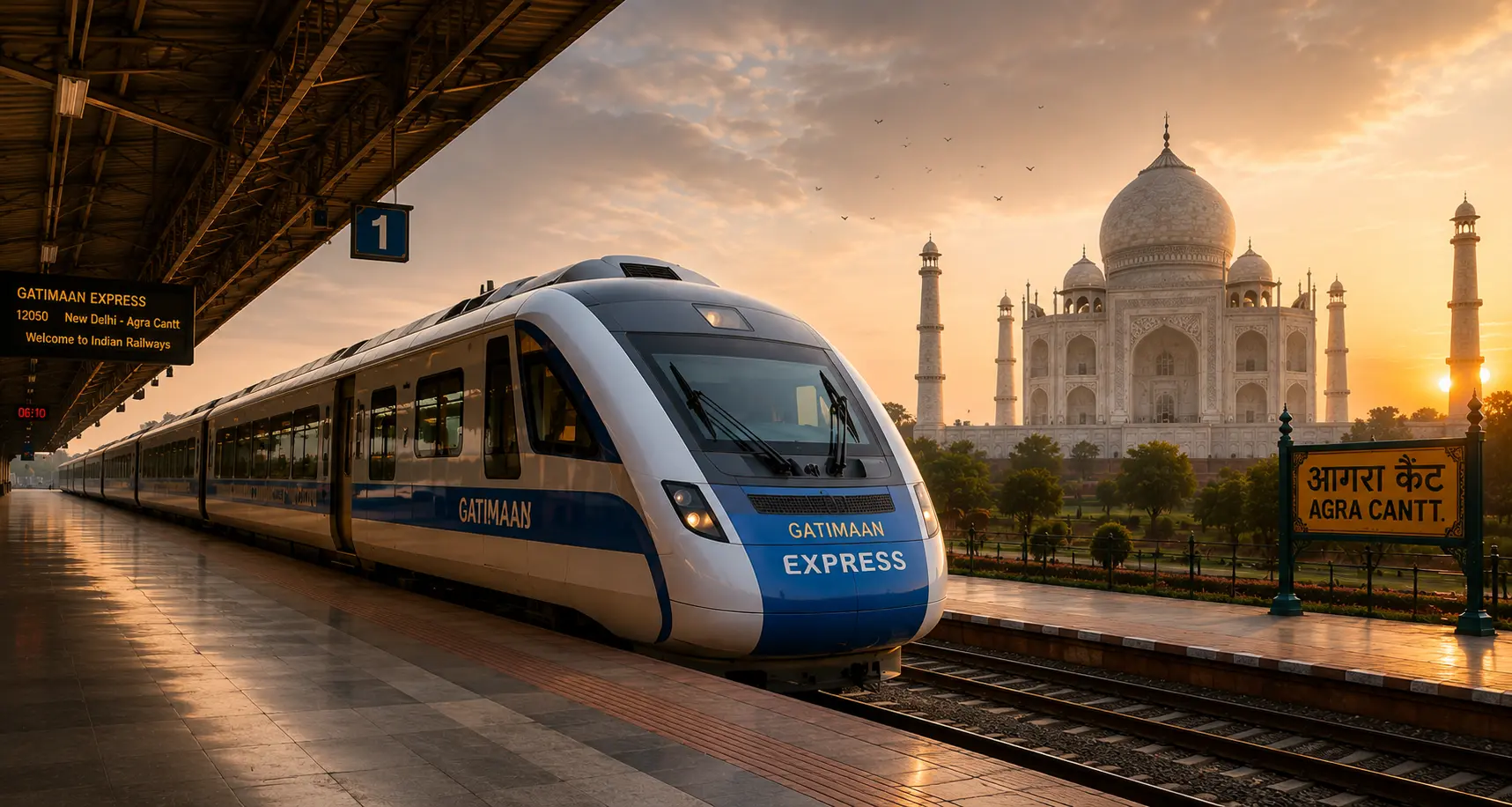
Short answer: No. The Gatimaan Express is not India's fastest train. When it launched in 2016 it was the first Indian train to run at 160 km/h in regular service, but today the Vande Bharat Express and the Namo Bharat regional trains run at the same top speed. Gatimaan is still one of the two fastest ways between Delhi and Agra, about 100 minutes. Most foreign travellers choose it for another reason: it's the only fast train that takes you to Agra in the morning and brings you back to Delhi the same evening.
I meet guests off the Gatimaan Express at Agra Cantt station almost every week, and many arrive believing they've just ridden "India's fastest train." Plenty of websites still say so. It's a fair question, and the honest answer is more useful than the myth, especially if you're planning a Taj Mahal day trip.
What Is the Gatimaan Express?
The Gatimaan Express is a fully air-conditioned, reserved-seat express train run by Indian Railways. Gatimaan means "speedy" in Hindi.
- Launched: 5 April 2016, between Hazrat Nizamuddin (Delhi) and Agra Cantt.
- Route today: Delhi – Agra – Gwalior – Jhansi. It was extended to Gwalior and Jhansi in 2018.
- Top speed: 160 km/h (99 mph) on the Tughlakabad–Agra section.
- Delhi to Agra: about 100 minutes.
- Classes: Executive Chair Car (EC) and AC Chair Car (CC), with meals served at your seat.
- Runs: six days a week, not on Fridays.
What Is the Fastest Train in India Right Now?
No passenger train in India runs faster than 160 km/h yet, and three services share that top speed:
| Train | Top operating speed | Where |
|---|---|---|
| Namo Bharat (RRTS) | 160 km/h | Delhi–Meerut regional corridor, built on its own dedicated tracks |
| Vande Bharat Express | 160 km/h where the track allows (designed for 180) | Many routes across India; 160 km/h only on upgraded sections such as Delhi–Agra |
| Gatimaan Express | 160 km/h | Delhi–Agra section of its Delhi–Jhansi route |
Judged by average speed over a whole journey, several Vande Bharat services beat Gatimaan. Gatimaan averages about 91 km/h over its full Delhi–Jhansi run, because it slows down beyond Agra.
India's first true high-speed line, the Mumbai–Ahmedabad "bullet train" designed for around 320 km/h, is under construction but not yet carrying passengers.
Speeds on Indian lines change with safety work. In mid-2024, trains on the Delhi–Agra section were reportedly limited to 130 km/h until the Kavach anti-collision system was installed. Scheduled journey times have stayed close to 100 minutes, but check current speeds with Indian Railways if they matter to you.
So Why Do People Call It "India's Fastest Train"?
Because for a few years, it was. In 2016 Gatimaan became India's first semi-high-speed train, the first to run at 160 km/h in regular passenger service. Articles, guidebooks and tour listings from that time still describe it that way, and the label stuck.
Vande Bharat trains arrived in 2019. Since 2023, Vande Bharat services on the Delhi–Agra line run at the same 160 km/h, and in 2025 the Namo Bharat corridor joined them. Gatimaan is a pioneer, but it's no longer the record holder.
Is Gatimaan the Fastest Train Between Delhi and Agra?
It's one of the fastest, but not the only one. Two Vande Bharat trains use the same 160 km/h stretch and take about the same time:
| Train | Delhi → Agra | Agra → Delhi |
|---|---|---|
| Gatimaan Express not Fridays | 08:10 → 09:50 | late afternoon → about 19:30 |
| Vande Bharat (Khajuraho) not Mondays | 06:00 → 07:40 | 21:00 → 23:10 |
| Vande Bharat (Bhopal) | 14:40 → 16:16 | 11:05 → 13:16 |
Timings are from published 2026 schedules and can change. Always confirm on IRCTC or NTES before booking.
On the clock, all three take roughly 95–100 minutes between Delhi and Agra, so no single train is clearly faster. Look closely at the times, though, and you'll see why one of them is the obvious choice for visitors.
Why Do Most Foreign Travellers Use the Gatimaan Express?
Because its timetable is the only one that fits a same-day Taj Mahal trip. Speed gets you there quickly; the schedule is what makes the day work.
- Out in the morning, back for dinner. Leave Delhi at 08:10, reach Agra at 09:50, spend about seven hours at the Taj Mahal, Agra Fort and lunch, and be back in Delhi around 19:30. Neither Vande Bharat offers that: the Bhopal train gets you to Agra in the late afternoon and returns in the morning, and the Khajuraho train's return doesn't reach Delhi until after 11 pm.
- A humane start time. 08:10 means a hotel pickup around 7:00. The 06:00 Vande Bharat means leaving your hotel before 5:00 AM.
- It was built for this route. Gatimaan was launched specifically as a Delhi–Agra service, Agra was its original destination, and Taj Mahal day tours have been planned around its timetable for a decade.
- Its days off match the Taj's. Gatimaan doesn't run on Fridays, and the Taj Mahal is closed on Fridays anyway, so you lose nothing.
- It's quicker than the road. Driving from Delhi takes 3–4 hours each way depending on traffic; the train saves you two to three hours a day.
- It's comfortable. Reserved seats, air-conditioning, clean coaches and a meal at your seat. Executive class gives you wider seats and more legroom.
So the honest way to describe it: Gatimaan isn't India's fastest train, but it's the fastest practical way to see the Taj Mahal from Delhi in one day.
Is the Gatimaan Express Worth It?
For a Taj Mahal day trip, yes. You trade a long highway drive for a 100-minute train ride, arrive fresh, and get a full day in Agra. If you'd rather see the Taj Mahal at sunrise, a private car leaving Delhi before dawn, or a night in Agra, works better. The train simply arrives too late for sunrise.
For the full picture, including which class to book, how foreigners buy tickets and train vs car, read our guide: Taj Mahal Day Trip from Delhi by Gatimaan Express: Is It Worth It?
Tips for Riding the Gatimaan Express
- Book early. Seats open about two months ahead, and October–March weekends sell out.
- Go from Hazrat Nizamuddin, not New Delhi station.
- Carry your passport. It's checked on board, and you'll need it at the Taj Mahal too.
- Arrive 30 minutes early. The station is busy and there's a bag scan at the entrance.
- Avoid Fridays. No Gatimaan, and no Taj Mahal.
- Winter fog: from mid-December to January, morning trains can run late. Keep your afternoon flexible.
The Verdict
The Gatimaan Express is not the fastest train in India. It shares its 160 km/h top speed with Vande Bharat and Namo Bharat, and it's about as fast as the Vande Bharat trains between Delhi and Agra. What makes it special is the timetable: it's the only fast train that lets you leave Delhi after breakfast, spend a full day at the Taj Mahal and be back for dinner. That's why it remains the first choice for foreign travellers, and why we build our Gatimaan day tour around it.
View the Gatimaan Express Taj Mahal Tour
Frequently Asked Questions
Is the Gatimaan Express the fastest train in India?
No. It was the first Indian train to run at 160 km/h in 2016, but Vande Bharat Express and Namo Bharat trains now run at the same top speed.
What is the fastest train in India?
No passenger train in India runs above 160 km/h yet. Namo Bharat, Vande Bharat Express and Gatimaan Express all reach that speed on suitable track. The Mumbai–Ahmedabad bullet train is still under construction.
Is Gatimaan the fastest train from Delhi to Agra?
It's one of the fastest, at about 100 minutes, but two Vande Bharat trains take about the same time on the same line.
Why do tourists take the Gatimaan Express to Agra?
Its timetable fits a day trip: it leaves Delhi at 08:10, reaches Agra at 09:50 and brings you back to Delhi around 19:30 the same day. No other fast train offers that round trip.
How long does the Gatimaan Express take from Delhi to Agra?
About 100 minutes, from Hazrat Nizamuddin to Agra Cantt.
Does the Gatimaan Express run on Fridays?
No. It runs six days a week and skips Fridays, the same day the Taj Mahal is closed.
Sources: Indian Railways published schedules (via IRCTC/NTES and public timetable listings), the Wikipedia entries for the Gatimaan Express and the Rani Kamalapati–Hazrat Nizamuddin Vande Bharat, and news reports on Namo Bharat's 160 km/h operations.