Planning a Student Trip to India from the US or Europe? Your Questions Answered
By Riyaz, licensed guide in Agra · 10 min read
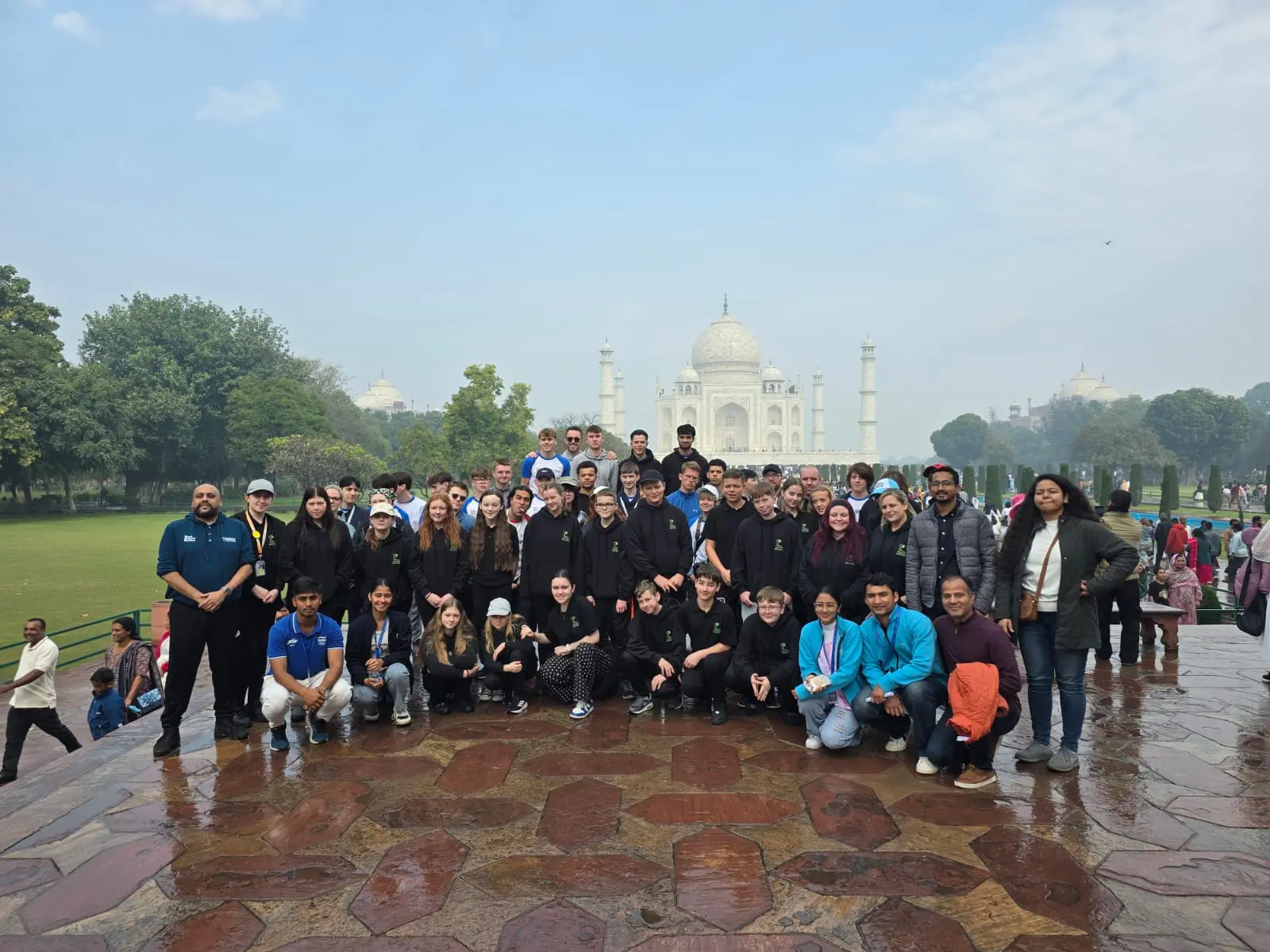
Short answer: North India is one of the richest classrooms in the world for students from America and Europe. A 7–10 day circuit of Delhi, Agra and Jaipur covers world history, religion, architecture, science, economics and culture — and with a licensed guide, private transport, vetted hotels and a clear safety plan, it is a well-controlled trip for school and university groups. Go between October and March, give it at least a week, and plan the learning goals before you plan the hotels.
Teachers, professors and study-abroad coordinators from the US, the UK and across Europe often write to me with a long list of questions before they commit. Is it safe? Which visa? What will the students actually learn? What happens if someone gets sick? Below are honest answers to the questions I'm asked most — the same things you've probably been typing into Google.
Is India Safe for a Student Group Trip?
Yes — when it's planned properly. Delhi, Agra and Jaipur are on India's most travelled tourist route, and student groups visit them every year. What makes a group trip safe is not the destination alone but the structure around it:
- A licensed guide with the group all day, not just at monuments.
- A private air-conditioned coach with an experienced driver — no public buses or random taxis.
- Vetted hotels with 24-hour reception and security, and students rooming together on the same floor.
- A clear chaperone ratio. Most schools use around 1 adult to 8–10 high-school students; universities usually need fewer.
- A 24/7 local contact who speaks Hindi and English and knows the nearest good hospital in every city.
- Simple house rules: buddy system, no wandering off alone, no street food without the guide's okay, curfew agreed in advance.
For female students in particular, modest clothing, staying with the group and a guide who handles crowd situations make a real difference. Your school should also check its own government's advisory — the US State Department, UK FCDO or your EU foreign ministry — as part of its risk assessment.
Do American and European Students Need a Visa for India?
Yes. Most US, UK, Canadian and EU passport holders can apply online for an Indian e-Visa before travel — no embassy visit needed. Passports usually need at least six months' validity and two blank pages.
One important point for coordinators: a short sightseeing-based educational tour is different from a formal study programme. If students will be enrolled in courses at an Indian university or earning credit through a local institution, a different visa category may apply. Always confirm on the official Indian visa website for your nationality and programme type, and apply at least 4–6 weeks ahead so there's time to fix any photo or document issues.
What Is the Best Time for an Educational Tour of North India?
October to March, and for groups I especially recommend February–March or October.
- October: warm, clear days, festive season begins. Great for fall programmes.
- November–January: pleasant days but cold mornings, fog that can delay trains and flights, and often poor air quality in Delhi. Workable — but build in buffer time and bring masks for students with asthma.
- February–March: my favourite for school groups. Comfortable temperatures, cleaner air, and it lines up neatly with US spring break and European Easter holidays. If your dates fall on Holi (the festival of colours), students get an unforgettable cultural lesson — with a guide to keep things controlled.
- April–June: very hot, regularly above 40°C. I don't recommend it for students.
- July–September: monsoon. Humid and rainy, but possible for summer programmes with indoor-heavy schedules.
How Many Days Does a Student Trip to India Need?
Seven to ten days on the ground is ideal. Flights from the US East Coast or Western Europe are long (roughly 8–15 hours depending on your route), and India is 4.5–10.5 hours ahead, so students lose the first day to jet lag. Any shorter and the trip becomes a blur of monuments; any longer and younger groups start to tire.
- 7 days: Delhi, Agra and Jaipur at a pace students can actually absorb.
- 10 days: add Varanasi for religion and philosophy, or Ranthambore for wildlife and conservation.
- 12–14 days: continue to Udaipur, or combine sightseeing with a service-learning or homestay component.
What Will Students Actually Learn in North India?
This is the question I love most. Every stop on a well-planned route can tie back to something in the curriculum:
- World history: the Delhi Sultanate at Qutub Minar, the Mughal Empire at Humayun's Tomb, Agra Fort and Fatehpur Sikri, British colonial rule in Lutyens' New Delhi, and Independence and Gandhi at Raj Ghat and Gandhi Smriti.
- Religion and philosophy: Hindu temples, the Jama Masjid, Sikhism at Gurudwara Bangla Sahib — where students can help in the free community kitchen that feeds thousands daily — plus Jain and Buddhist heritage.
- Architecture and engineering: the symmetry, optical tricks and marble inlay of the Taj Mahal; Rajput fort design at Amber; stepwells built for water harvesting.
- Science and maths: the 18th-century astronomical instruments of Jantar Mantar in Jaipur, a UNESCO site where students can read the time from a giant sundial.
- Economics and development: the wholesale markets of Old Delhi, informal economies, urbanisation, and social enterprises working on real problems.
- Art and craft: marble inlay workshops in Agra run by families descended from Taj craftsmen; block printing and textile dyeing near Jaipur.
- Environment and conservation: tiger conservation and human–wildlife conflict at Ranthambore National Park.
- Global citizenship: navigating a culture very different from home — often the lesson students remember longest.
Tell us your subject — history, religious studies, architecture, business, sociology, photography — and we'll weight the itinerary and the guide's commentary towards it. Many teachers ask for short daily reflection prompts, and we're happy to help prepare them.
What Does a Sample 8-Day Educational Itinerary Look Like?
- Day 1 — Arrive Delhi: Airport pickup, hotel check-in, orientation and safety briefing. Light evening.
- Day 2 — New Delhi: Humayun's Tomb, Qutub Minar, India Gate. Afternoon at Gurudwara Bangla Sahib and its community kitchen.
- Day 3 — Old Delhi: Jama Masjid, Chandni Chowk on foot, spice market, cycle-rickshaw ride. Gandhi Smriti in the afternoon.
- Day 4 — Delhi to Agra: Drive or take the fast train. Agra Fort, then a marble inlay workshop demonstration.
- Day 5 — Agra to Jaipur: Taj Mahal at sunrise, then Fatehpur Sikri on the way to Jaipur.
- Day 6 — Jaipur: Amber Fort, City Palace, Jantar Mantar, Hawa Mahal.
- Day 7 — Jaipur: Block-printing workshop, Abhaneri stepwell or a village visit, farewell dinner with folk performance.
- Day 8 — Departure: Transfer to Jaipur or Delhi airport.
Remember: the Taj Mahal is closed on Fridays. We always build the Agra day around that first. See our Educational Tours page for how we structure group trips, or the Golden Triangle Tour for the classic route.
What About Health, Vaccinations and Travel Insurance?
- Vaccinations: students should visit a travel clinic 6–8 weeks before departure. Hepatitis A and typhoid are commonly recommended; check the CDC or NHS Fit for Travel for current advice.
- Stomach upsets are the most common issue. Bottled or filtered water only, freshly cooked food, hand sanitiser before every meal, and a guide who chooses the restaurants prevent most problems.
- Travel insurance with medical evacuation cover is essential — most schools require it.
- Medical care: Delhi, Agra and Jaipur all have good private hospitals. Our team knows where they are and can get a student there quickly.
- Medication: students should bring enough prescription medicine for the whole trip, in original packaging, with a doctor's note.
Can You Handle Dietary Requirements?
Yes — North India is one of the easiest places in the world to be vegetarian. Vegan, Jain, halal, nut-free and gluten-free needs can all be managed with advance notice; send us the list before the trip and we brief every hotel and restaurant. Kosher is more limited and needs special planning. For students nervous about spice, every kitchen can make milder versions — and most students are eating paneer and dal happily by day three.
Where Do Student Groups Stay?
Usually in clean, secure 3- or 4-star hotels with twin or triple rooms for students and single rooms for staff, all on the same floor where possible. We choose hotels with 24-hour reception, in-house dining (so you're not out late looking for dinner) and a space for evening group debriefs. University groups on tighter budgets can use well-reviewed business hotels without compromising on safety.
How Much Does an Educational Trip to India Cost?
Ground costs depend on group size, hotel category, season and how many specialist activities you add — so we quote each group individually. As a rule, larger groups bring the per-student cost down, and travelling in February–March or October gives the best balance of price and comfort. Flights from the US or Europe are usually the biggest single cost, so book them early. Send us your group size and dates and we'll send a clear, itemised quote with nothing hidden.
What Should Students Pack and Know Before They Go?
- Dress code: loose, breathable clothes covering shoulders and knees for everyone. A scarf is useful for covering heads at mosques and gurudwaras.
- Shoes: comfortable slip-ons — students remove them often at religious sites.
- Money: cards work in hotels and larger shops; small cash in rupees is handy for markets. Students should tell their bank before travelling.
- Phones: an eSIM or international plan so they can reach staff on WhatsApp, which is how almost everyone communicates in India.
- Photography: always ask before photographing people. Drones are not allowed at monuments.
- Mindset: India is loud, busy and full of contrast. Prepare students for that — then let it surprise them.
More in our North India travel tips.
Why Use a Local Licensed Guide Instead of a Big Overseas Operator?
Large overseas operators often subcontract the ground work to local companies anyway. Working directly with a licensed local guide means the person who answers your emails is the person standing next to your students at the Taj Mahal. You get faster answers, more flexibility to change the plan on the day, deeper storytelling at every monument, and a single point of contact who knows every driver, hotel and hospital on the route.
The Verdict
For students from America and Europe, a well-planned educational tour of North India turns textbook chapters into places they've stood in — Mughal history at the Taj, astronomy at Jantar Mantar, faith and service at a Sikh community kitchen. Travel between October and March, allow 7–10 days, set clear learning goals and safety rules, and work with people on the ground who do this every week. Your students will come home with more than photos.
Ready to start planning? Explore our Educational Tours, compare 6–10 day packages, or contact Riyaz with your group size, dates and subject focus.
Frequently Asked Questions
Is India safe for a student group trip from the US or Europe?
Yes, when it's planned properly. A licensed guide with the group at all times, private transport, vetted hotels, a clear chaperone ratio and a 24/7 local contact make Delhi, Agra and Jaipur a well-controlled trip for school and university groups.
What is the best time for an educational tour of North India?
October to March. February, March and October are best for groups — pleasant weather and usually better air quality than November to January. Avoid May and June.
How many days does a student trip need?
Seven to ten days on the ground. Seven covers Delhi, Agra and Jaipur; ten lets you add Varanasi, Ranthambore or Udaipur.
Do American and European students need a visa?
Yes. Most US, UK, Canadian and EU passport holders can apply online for an Indian e-Visa. Formal study programmes may need a different visa, so check the official Indian visa website early.
What do students learn on an educational tour of India?
World history, religion, architecture, astronomy, economics and development, traditional crafts, wildlife conservation and intercultural skills — all tied to real places.
Can you handle dietary requirements?
Yes. Vegetarian food is everywhere, and vegan, Jain, halal, nut-free and gluten-free needs can be managed with advance notice. Kosher needs special planning.